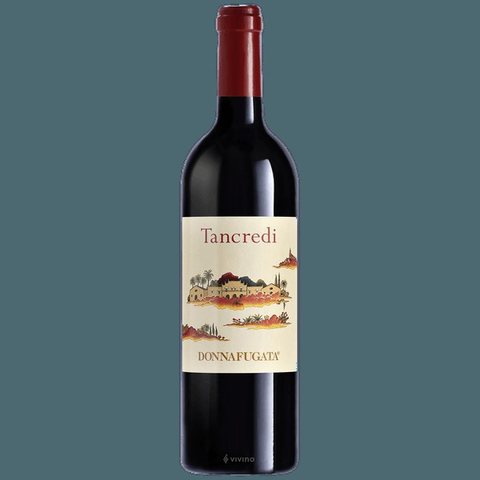
Red · Terre Siciliane · Italy
Donnafugata Tancredi
Scored from 2,801 calibrated Vivino reviewers. Cohort: Red · Italy (947 wines).
Find this wine: view on Vivino · compare prices on Wine-Searcher
Is Tancredi a good wine?
What reviewers say
“Veramente un ottimo rosso. Un bel naso, è così vario il ventaglio aromatico, passa dai sentori del lampone, a quelli del cacao amaro, alla liquirizia, al caffè.”
From a top-rated Vivino review for this bottle.
Summary
Elegant and bodied red wine, its bouquet settles on notes of liquorice, cocoa, black currant, berries with a hits of mint. This wine shows elegance and longevity, thanks to firm and velvety tannins, fruity (cherry and sour cherry) and spicy notes.
Donnafugata Tancredi is Cabernet Sauvignon grown in Terre Siciliane, bottled as a red. The cheapest 750 ml listing found for it is $74.69, which puts the bottle in the $60–120 band.
The calibrated figure is built from 2,801 of its Vivino reviewers. A broader pool of 2,874 reviewers with two or more ratings feeds the raw-average track instead. 946 other reds from Italy form the cohort it is ranked inside.
- Cohort
- Red · Italy · 947 wines
- Calibrated reviewers
- none yet
Cohort: Red · Italy