Red · Robertson · África do Sul
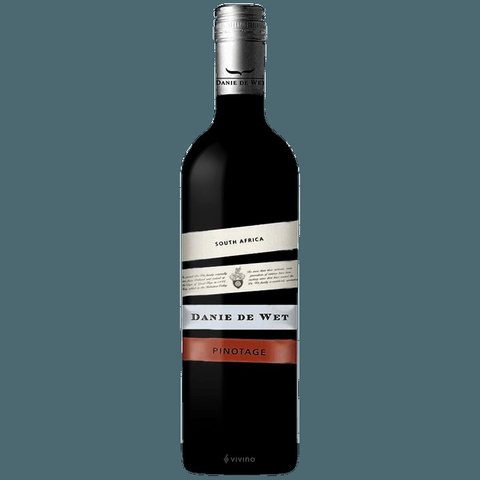
De Wetshof Danie de Wet Pinotage
Scored from 1,036 calibrated Vivino reviewers. Cohort: Red · África do Sul (11 wines).
Find this wine: view on Vivino · compare prices on Wine-Searcher
Is Danie de Wet Pinotage a good wine?
What reviewers say
“Muito bom vinho sul-africano tomado no D’amici da Barra. Danie de Wet, safra 2020, 100% composto por Pinotage. No aspecto, rubi intenso, intransponível, jovem, viscoso e untuoso com lágrimas.”
From a top-rated Vivino review for this bottle.
Summary
It is goes well with pizza and pasta but also with grilled and braised dishes.In the wine-growing area robertson on the edge of the Karoo half desert in the valley of the breede River. The vineyards are planted with 4000 vines per hectare, these bring two to twelve tons of yield depending on type of vine.
De Wetshof Danie de Wet Pinotage is a South African red from Robertson.
The calibrated figure is built from 1,036 of its Vivino reviewers. A broader pool of 1,066 reviewers with two or more ratings feeds the raw-average track instead. The cohort it is ranked inside holds 11 South African reds.
- Cohort
- Red · África do Sul · 11 wines
- Calibrated reviewers
- none yet
Cohort: Red · África do Sul