RankquantRQ
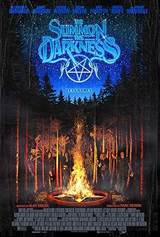
We Summon the Darkness (2019) poster
2019
global pct
20.9

Film · 2019 · Films · 2010s

We Summon the Darkness

Scored from 198 calibrated IMDb reviewers, each re-centered on their own rating baseline before the title is ranked. Cohort: Films · 2010s (13,059 peers).

20.9%
Global percentile
vs. all 52,376 ranked titles
25.5%
In-cohort percentile
Films · 2010s · 13,059 titles
6.2%
AI-adjusted percentile
198 calibrated reviewers, thin samples pulled to the mean

Summary

Three young women road-trip to a heavy metal concert in 1988 Indiana, where news reports warn of a string of Satanic cult murders sweeping the country. After the show, they invite three guys back to a secluded house party, and the night takes a sinister turn as hidden motives among the group come to light.

Released in 2019, We Summon the Darkness is a drama, horror and music film.

Rotten Tomatoes carries a separate audience for the same title, 65 of whom clear the calibration test. The calibrated figure is built from 198 reviewers whose rating history varies enough to place their own average. A broader pool of 203 reviewers with two or more reviews feeds the raw-average track instead. Its in-cohort standing is measured against the other 13,058 2010s films, not against the whole corpus.

How the score was built

We compare the reviewers of this title against every other title those same people reviewed. Each review is scored relative to the reviewer's own baseline — a 7/10 from a hard grader sits well above their average, while a 7/10 from a generous grader sits below theirs. Every reviewer then counts the same, so the result is a calibrated consensus rather than a raw average.

Global percentile
Where We Summon the Darkness lands against every title we rank.
In-cohort percentile
The same comparison narrowed to its cohort — titles of the same format released in the same decade. A 1970s film is judged against 1970s films, not against last year's streaming series. Ranked against Films · 2010s (13,059 titles).
AI-adjusted percentile
The same reviewer-normalized score, corrected for how much confidence the sample supports: thin samples are pulled toward the corpus average. Each title keeps the share n / (n + 53) of its measured distance from the average, where n is its calibrated-reviewer count, and the result is ranked on the same scale as the global percentile.53 is the median sample size across everything we rank. Here n is 198.

Cohort: Films · 2010s

Closest peers in the same cohort

See all 52,376