Film · 2000 · Films · 2000s
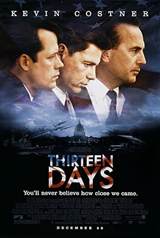
Thirteen Days
Scored from 266 calibrated IMDb reviewers. Cohort: Films · 2000s (7,847 peers).
Summary
A dramatization of the Cuban Missile Crisis of October 1962, seen largely through the eyes of President John F. Kennedy, his brother Robert, and special assistant Kenneth O'Donnell. As U.S. intelligence discovers Soviet nuclear missiles being installed in Cuba, the White House scrambles to find a response that avoids both capitulation and nuclear war, navigating intense pressure from the military and a tense standoff with Moscow.
Thirteen Days (2000) is a film IMDb files under the drama, history and thriller genres.
266 IMDb reviewers are calibrated for this title, and those are the ones the calibrated score reads; a separate, broader pool of 271 reviewers with at least two reviews each feeds the raw-average track. A second review pool sits behind it as well: 993 Rotten Tomatoes reviewers clear the same calibration test, and Rankquant scores them separately. Its in-cohort standing is measured against the other 7,846 2000s films, not against the whole corpus.
Is Thirteen Days (2000) worth watching?
- Cohort
- Films · 2000s · 7,847 titles
- Calibrated reviewers
- 266
Cohort: Films · 2000s