Film · 2019 · Films · 2010s
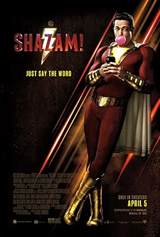
Shazam!
Scored from 1,780 calibrated IMDb reviewers. Cohort: Films · 2010s (13,059 peers).
Summary
Fourteen-year-old foster kid Billy Batson meets a mysterious wizard who grants him the power to transform into an adult superhero whenever he speaks the word 'Shazam.' Billy must learn to control his newfound superpowers—including strength, flight, and lightning manipulation—while protecting his newfound family and discovering what true heroism means.
Shazam! is a 2019 action, comedy and fantasy film directed by David F. Sandberg. It runs 2h 12m. Inside comedy it is classed as Action Comedy. Its certificate is PG-13. Its country of origin is listed as the United States. Zachary Levi, Asher Angel and Mark Strong head the billed cast.
The calibrated figure is built from 1,780 of its IMDb reviewers. A broader pool of 1,850 reviewers with two or more reviews feeds the raw-average track instead. 13,058 other films from the 2010s form the cohort it is ranked inside. Rotten Tomatoes carries a separate audience for the same title, 2,918 of whom clear the calibration test.
Is Shazam! (2019) worth watching?
- Cohort
- Films · 2010s · 13,059 titles
- Calibrated reviewers
- 1,780
Cohort: Films · 2010s