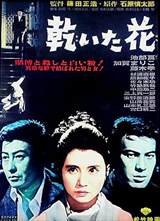
Film · 1964 · Films · 1960s
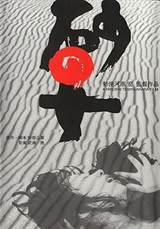
Pale Flower
Scored from 28 calibrated IMDb reviewers, each re-centered on their own rating baseline before the title is ranked. Cohort: Films · 1960s (1,929 peers).
Summary
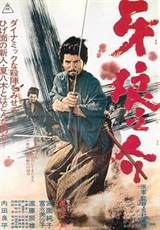
Masahiro Shinoda's black-and-white Japanese New Wave crime film follows Muraki, a yakuza soldier just out of prison for a killing he committed on his gang's orders, returning to a Tokyo underworld rearranged by a truce with the rival clan. Back at the illegal hanafuda card games that give his life its shape, he becomes fixated on Saeko, a young woman of evident means who gambles for the sensation of risk rather than for money and keeps asking to play for higher stakes. Muraki obliges, steering her toward bigger games, night drives at speed and finally the edges of the drug trade, while a silent, unsettling addict named Yoh watches her across the tables. Toru Takemitsu's score turns the gambling rooms into ritual.
Released in 1964, Pale Flower is a crime, drama and romance film. It runs 1h 36m. It was made in Japan. It plays in Japanese.
Its in-cohort standing is measured against the other 1,928 1960s films, not against the whole corpus. Rotten Tomatoes carries a separate audience for the same title, 45 of whom clear the calibration test. Only 28 of its IMDb reviewers rate with enough spread for a personal baseline to be measured, so the calibrated figure rests on a thin sample; a broader pool of 28 reviewers with at least two reviews feeds the raw-average track.
How the score was built
We compare the reviewers of this title against every other title those same people reviewed. Each review is scored relative to the reviewer's own baseline — a 7/10 from a hard grader sits well above their average, while a 7/10 from a generous grader sits below theirs. Every reviewer then counts the same, so the result is a calibrated consensus rather than a raw average.
- Global percentile
- Where Pale Flower lands against every title we rank.
- In-cohort percentile
- The same comparison narrowed to its cohort — titles of the same format released in the same decade. A 1970s film is judged against 1970s films, not against last year's streaming series. Ranked against Films · 1960s (1,929 titles).
- AI-adjusted percentile
- The same reviewer-normalized score, corrected for how much confidence the sample supports: thin samples are pulled toward the corpus average. Each title keeps the share n / (n + 53) of its measured distance from the average, where n is its calibrated-reviewer count, and the result is ranked on the same scale as the global percentile.53 is the median sample size across everything we rank. Here n is 28.
Cohort: Films · 1960s