Film · 1983 · Films · 1980s
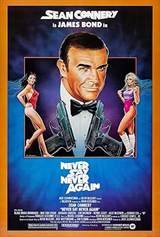
Never Say Never Again
Scored from 256 calibrated IMDb reviewers. Cohort: Films · 1980s (3,141 peers).
Summary
An aging James Bond is brought out of semi-retirement when SPECTRE hijacks two American cruise missiles armed with nuclear warheads and holds the world to ransom. Agent 007 tracks the trail from a Caribbean health clinic to the South of France and North Africa, crossing paths with the wealthy henchman Maximillian Largo and his mistress Domino as he races to recover the stolen weapons.
Never Say Never Again is a 1983 action, adventure and thriller film.
256 IMDb reviewers are calibrated for this title, and those are the ones the calibrated score reads; a separate, broader pool of 260 reviewers with at least two reviews each feeds the raw-average track. A second review pool sits behind it as well: 1,226 Rotten Tomatoes reviewers clear the same calibration test, and Rankquant scores them separately. Its in-cohort standing is measured against the other 3,140 1980s films, not against the whole corpus.
Is Never Say Never Again (1983) worth watching?
- Cohort
- Films · 1980s · 3,141 titles
- Calibrated reviewers
- 256
Cohort: Films · 1980s