Film · 2019 · Films · 2010s
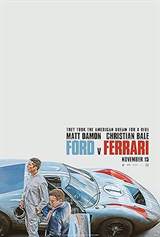
Ford v Ferrari
Scored from 1,410 calibrated IMDb reviewers. Cohort: Films · 2010s (13,059 peers).
Summary
In the 1960s, visionary car designer Carroll Shelby partners with British driver Ken Miles to build a revolutionary race car for Ford, with the goal of defeating Ferrari at the 1966 Le Mans 24-hour race. As the two men battle both corporate obstacles and their own demons, they must overcome the odds to prove that American engineering can triumph over Ferrari's dominance.
Released in 2019, Ford v Ferrari is a drama, sport and biography film. Christian Bale, Matt Damon and Jon Bernthal head the billed cast. James Mangold directed it. Its certificate is PG-13. Its country of origin is listed as the United States. It runs 2h 32m.
Rotten Tomatoes carries a separate audience for the same title, 2,175 of whom clear the calibration test. The calibrated figure is built from 1,410 of its IMDb reviewers. A broader pool of 1,497 reviewers with two or more reviews feeds the raw-average track instead. The cohort it is ranked inside is 2010s films — 13,059 of them.
Is Ford v Ferrari (2019) worth watching?
- Cohort
- Films · 2010s · 13,059 titles
- Calibrated reviewers
- 1,410
Cohort: Films · 2010s