RankquantRQ
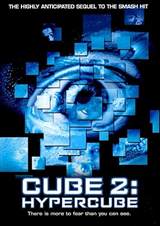
Cube²: Hypercube (2002) poster
2002
global pct
13.5

Film · 2002 · Films · 2000s

Cube²: Hypercube

Scored from 179 calibrated IMDb reviewers, each re-centered on their own rating baseline before the title is ranked. Cohort: Films · 2000s (7,847 peers).

13.5%
Global percentile
vs. all 52,376 ranked titles
14.6%
In-cohort percentile
Films · 2000s · 7,847 titles
2.9%
AI-adjusted percentile
179 calibrated reviewers, thin samples pulled to the mean

Summary

Eight strangers awaken with no memory of how they arrived inside a vast network of interconnected cubic rooms governed by shifting laws of physics, time, and gravity. As they search for an exit, they discover the structure is a tesseract where parallel realities overlap, and they must work out the rules of the hypercube before its distortions kill them.

Cube²: Hypercube (2002) is a film IMDb files under the horror, mystery and science-fiction genres.

The cohort it is ranked inside is 2000s films — 7,847 of them. 179 IMDb reviewers rate with enough spread for a personal baseline to be measured, and those are the ones the calibrated score reads; a separate, broader pool of 182 reviewers with at least two reviews each feeds the raw-average track.

How the score was built

We compare the reviewers of this title against every other title those same people reviewed. Each review is scored relative to the reviewer's own baseline — a 7/10 from a hard grader sits well above their average, while a 7/10 from a generous grader sits below theirs. Every reviewer then counts the same, so the result is a calibrated consensus rather than a raw average.

Global percentile
Where Cube²: Hypercube lands against every title we rank.
In-cohort percentile
The same comparison narrowed to its cohort — titles of the same format released in the same decade. A 1970s film is judged against 1970s films, not against last year's streaming series. Ranked against Films · 2000s (7,847 titles).
AI-adjusted percentile
The same reviewer-normalized score, corrected for how much confidence the sample supports: thin samples are pulled toward the corpus average. Each title keeps the share n / (n + 53) of its measured distance from the average, where n is its calibrated-reviewer count, and the result is ranked on the same scale as the global percentile.53 is the median sample size across everything we rank. Here n is 179.

Cohort: Films · 2000s

Closest peers in the same cohort

See all 52,376