Film · 2002 · Films · 2000s
City of God
Scored from 781 calibrated IMDb reviewers. Cohort: Films · 2000s (7,847 peers).
Summary
Set in a favela of Rio de Janeiro, the film chronicles the rise of a brutal drug lord known as Li'l Zé and the gang wars that reshape the community over several decades. Narrated by a young photographer named Rocket, the story interweaves multiple characters' perspectives as they navigate poverty, crime, and violence in the slums.
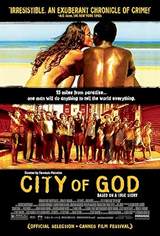
City of God is a 2002 drama, crime and thriller film directed by Fernando Meirelles and Kátia Lund. Its certificate is R. Alexandre Rodrigues, Leandro Firmino da Hora and Phellipe Haagensen head the billed cast. It plays in Portuguese. Its country of origin is listed as Brazil. It runs 2h 10m.
The calibrated figure is built from 781 of its IMDb reviewers. A broader pool of 880 reviewers with two or more reviews feeds the raw-average track instead. 7,846 other films from the 2000s form the cohort it is ranked inside. Rotten Tomatoes carries a separate audience for the same title, 12,931 of whom clear the calibration test.
Is City of God (2002) worth watching?
- Cohort
- Films · 2000s · 7,847 titles
- Calibrated reviewers
- 781
Cohort: Films · 2000s