Film · 1968 · Films · 1960s
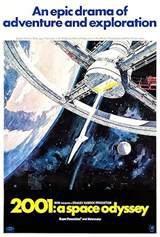
2001: A Space Odyssey
Scored from 1,877 calibrated IMDb reviewers. Cohort: Films · 1960s (1,929 peers).
Summary
In the distant past, a monolith appears before a tribe of apes, sparking human evolution. In the future, astronauts discover a magnetic anomaly on the Moon and embark on a mysterious mission to Jupiter, crewed by two pilots and an advanced artificial intelligence.
Stanley Kubrick directed 2001: A Space Odyssey, a science fiction and drama film from 1968. It stars Keir Dullea, Gary Lockwood and William Sylvester. It was made in the United States and the United Kingdom. It is rated G. The runtime is 149 minutes.
A second review pool sits behind it as well: 15,255 Rotten Tomatoes reviewers clear the same calibration test, and Rankquant scores them separately. 1,877 IMDb reviewers are calibrated for this title, and those are the ones the calibrated score reads; a separate, broader pool of 2,003 reviewers with at least two reviews each feeds the raw-average track. 1,928 other films from the 1960s form the cohort it is ranked inside.
Is 2001: A Space Odyssey (1968) worth watching?
- Cohort
- Films · 1960s · 1,929 titles
- Calibrated reviewers
- 1,877
Cohort: Films · 1960s