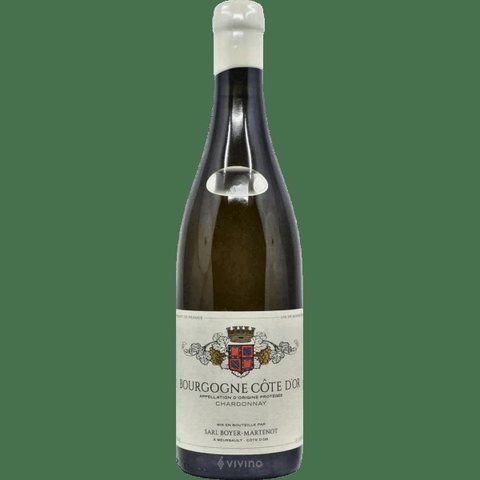
White · Bourgogne Côte d’Or · France
Yves Boyer-Martenot Bourgogne Côte d'Or Chardonnay
Scored from 61 calibrated Vivino reviewers. Cohort: White · France (7,336 wines).
Find this wine: view on Vivino · compare prices on Wine-Searcher
Is Bourgogne Côte d'Or Chardonnay a good wine?
What reviewers say
“Gul glas met rijp steenfruit, perzik, sappige appel en een zacht romig randje. Frisse zuren houden ’m mooi in balans, met de kenmerkende Bourgogne-mineraliteit. Gedronken bij “chicken in a bag” met limabonen, spinazie, tijm en citroen. Top pairing: citrus + zuren liften elkaar, subtiele romigheid van beiden sluit mooi bij elkaar aan. @[1|67744095|Loes Landwier]”
From a top-rated Vivino review for this bottle.
Summary
From Bourgogne Côte d’Or in France, Yves Boyer-Martenot Bourgogne Côte d'Or Chardonnay is a white.
The cohort it is ranked inside holds 7,336 French whites. 61 Vivino reviewers are calibrated for this bottle, and those are the ones the calibrated score reads; a separate, broader pool of 62 reviewers with at least two ratings each feeds the raw-average track.
- Cohort
- White · France · 7,336 wines
- Calibrated reviewers
- none yet
Cohort: White · France