Red · Aconcagua Valley · Chile
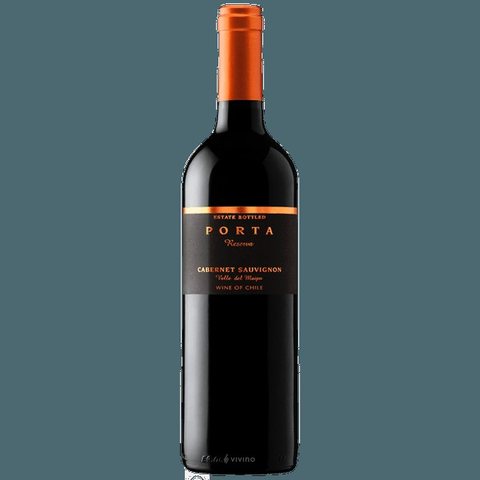
Porta Cabernet Sauvignon Reserva
Scored from 691 calibrated Vivino reviewers. Cohort: Red · Chile (444 wines).
Find this wine: view on Vivino · compare prices on Wine-Searcher
Is Cabernet Sauvignon Reserva a good wine?
What reviewers say
“Um dos melhores custo benefício que ja provei. 13,5 de alcool. Com açúcar residual. Ou seja, vejo q o enólogo interrompeu o processo de fermentação para chegar no equilíbrio. Falo neste vinho especificamente. Acidez e taninos equilibrados e todos os cheiros caracteristicos da uva. Por isso 4 estrelas nesse vinho que custa a bagaleta de menos de 100 reais.”
From a top-rated Vivino review for this bottle.
Summary
Fresh and intense fruit with notes of black cherry, red fruit and hints of smoke. Good structure and volume in the mouth, with round tannins.
Porta Cabernet Sauvignon Reserva is a Chilean red from Aconcagua Valley.
The calibrated figure is built from 691 of its Vivino reviewers. A broader pool of 718 reviewers with two or more ratings feeds the raw-average track instead. The cohort it is ranked inside holds 444 Chilean reds.
- Cohort
- Red · Chile · 444 wines
- Calibrated reviewers
- none yet