White · Stellenbosch · Afrique du Sud
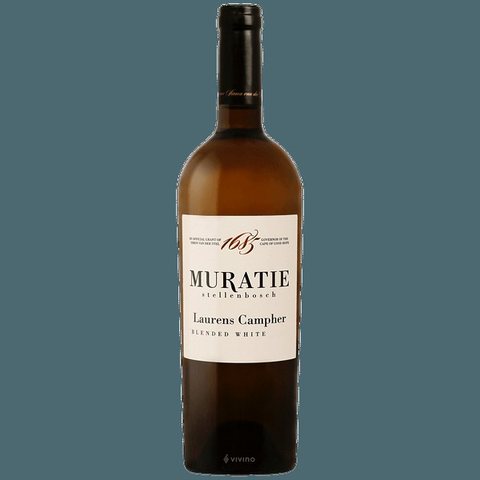
Muratie Laurens Campher
Scored from 358 calibrated Vivino reviewers. Cohort: White · Afrique du Sud (163 wines).
Find this wine: view on Vivino · compare prices on Wine-Searcher
Is Laurens Campher a good wine?
What reviewers say
“The year is 2223. The earth has been warming since the early 2020s and now all that is left is deserts and warm oceans. A survivor has miraculously made it this far and has been trying desperately to find another human to repopulate the earth and help mankind begin again.”
From a top-rated Vivino review for this bottle.
Summary
It has flavours ranging from honeysuckle to pineapple. It has a good acidic backbone with sufficient sugar to make this a wine with intense aromas that is well balanced.
Muratie Laurens Campher is a white from Stellenbosch, South Africa, blended from Viognier, Chenin Blanc, Sauvignon Blanc, Verdelho and Chardonnay.
The calibrated figure is built from 358 of its Vivino reviewers. A broader pool of 367 reviewers with two or more ratings feeds the raw-average track instead. Its in-cohort standing is measured against 162 other whites from South Africa, not against the corpus as a whole.
- Cohort
- White · Afrique du Sud · 163 wines
- Calibrated reviewers
- none yet
Cohort: White · Afrique du Sud