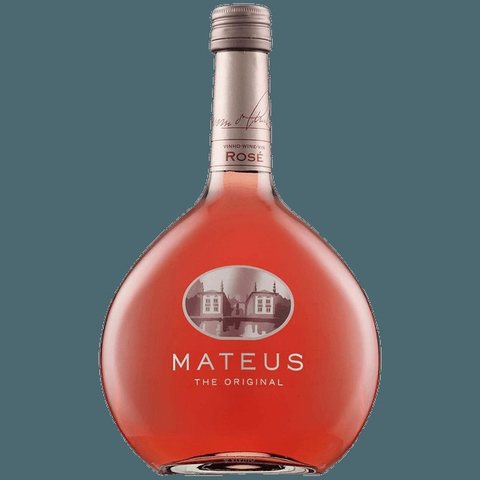
Rosé · Douro · Portugal
Mateus The Original Rosé
Scored from 13,025 calibrated Vivino reviewers. Cohort: Rosé · Portugal (427 wines).
Find this wine: view on Vivino · compare prices on Wine-Searcher
Is The Original Rosé a good wine?
What reviewers say
“My 1st review for 6wks .. I see Vivino is still as glitchy as ever! Is Mateus yesterdays wine? In todays quest for low alcohol??”
From a top-rated Vivino review for this bottle.
Summary
Mateus Rosé Original is a rosé with a very appealing and bright hue. On the whole, it is a fresh and seductive wine with fine and intense bouquet and all the joviality of young wines. In the mouth, it is a well balanced and tempting wine, brilliantly complemented by a soft and slightly fizzy finish.
From Douro in Portugal, Mateus The Original Rosé is a rosé. It blends Baga, Tinta Barroca, Touriga Franca and Rufete.
Its in-cohort standing is measured against 426 other rosés from Portugal, not against the corpus as a whole. 13,025 Vivino reviewers are calibrated for this bottle, and those are the ones the calibrated score reads; a separate, broader pool of 13,690 reviewers with at least two ratings each feeds the raw-average track.
- Cohort
- Rosé · Portugal · 427 wines
- Calibrated reviewers
- none yet