Red · Dogliani · Italy
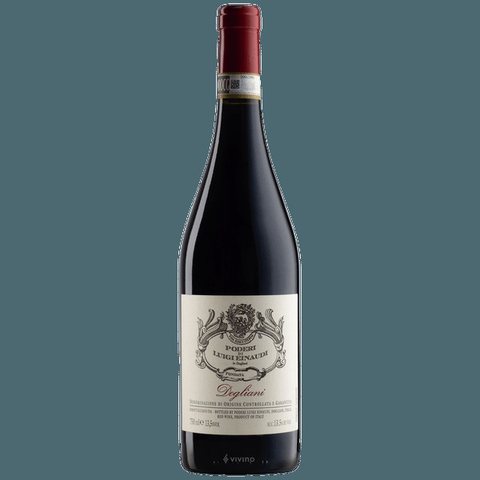
Luigi Einaudi Dogliani
Scored from 2,130 calibrated Vivino reviewers. Cohort: Red · Italy (947 wines).
Find this wine: view on Vivino · compare prices on Wine-Searcher
Is Dogliani a good wine?
What reviewers say
“Quality producer shining through here w a good value Dolcetto. Ripe blackberry, deep red cherry, black cherry, plum, cedar, smoke, vanilla, clove, earthy notes.”
From a top-rated Vivino review for this bottle.
Summary
Ruby red colour which tends toward violet, of a rich fresh fruity fragrance, full bodied with an intense aroma of undergrowth and a pleasantly tannic taste with a slight final almond note.
Luigi Einaudi Dogliani is a red from Dogliani, Italy. It is made from Dolcetto. The cheapest 750 ml listing found for it is $18.18, which puts the bottle in the $15–30 band.
The cohort it is ranked inside holds 947 Italian reds. 2,130 Vivino reviewers are calibrated for this bottle, and those are the ones the calibrated score reads; a separate, broader pool of 2,188 reviewers with at least two ratings each feeds the raw-average track.
- Cohort
- Red · Italy · 947 wines
- Calibrated reviewers
- none yet
Cohort: Red · Italy