Red · Bardolino Classico · Italien
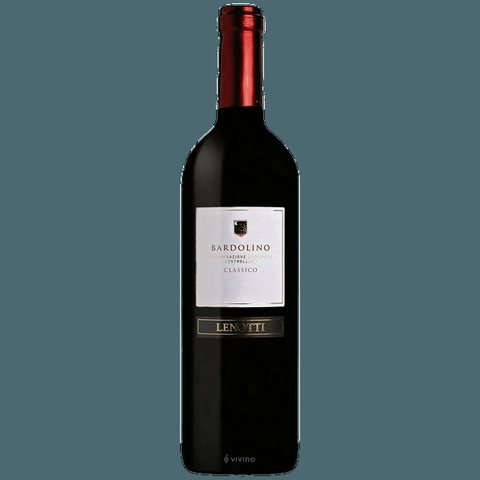
Lenotti Bardolino Classico
Scored from 801 calibrated Vivino reviewers. Cohort: Red · Italien (289 wines).
Find this wine: view on Vivino · compare prices on Wine-Searcher
Is Bardolino Classico a good wine?
What reviewers say
“Dry, savory & dark fruit, hints of wild blueberry, haskap, freeze-dried cherry & wild fruits. Gentle tannins. Did not pair well with pesto. Lingers on the palate as a medium finish. As usual with Italian wines, food pairing & air is very important.”
From a top-rated Vivino review for this bottle.
Summary
Dry red wine, fresh and light, suitable for every occasion and Red, light ruby, Vinous, delicate and fragrant.Dry, pleasant, aromatic and mellow.
Lenotti Bardolino Classico is a red from Bardolino Classico, Italy. It blends Garganega and Cortese.
801 Vivino reviewers are calibrated for this bottle, and those are the ones the calibrated score reads; a separate, broader pool of 839 reviewers with at least two ratings each feeds the raw-average track. Its in-cohort standing is measured against 288 other reds from Italy, not against the corpus as a whole.
- Cohort
- Red · Italien · 289 wines
- Calibrated reviewers
- none yet
Cohort: Red · Italien