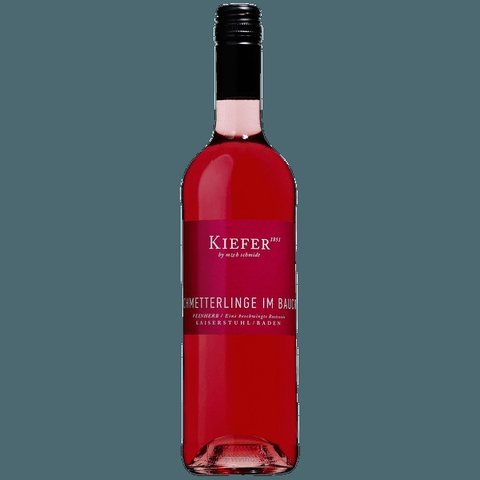
Rosé · Baden · Deutschland
Kiefer Schmetterlinge im Bauch Feinherb
Scored from 134 calibrated Vivino reviewers. Cohort: Rosé · Deutschland (334 wines).
Find this wine: view on Vivino · compare prices on Wine-Searcher
Is Schmetterlinge im Bauch Feinherb a good wine?
What reviewers say
“I didn’t drink it myself but my in-laws seem to enjoy it at this restaurant. Or better: they are not throwing up. Not that they do that a lot. Never seen them throwing up from wine. But also never seen them jumping up and down with confetti because of drinking a good wine. Do there you go: a well-deserved 4 stars!”
From a top-rated Vivino review for this bottle.
Summary
Strong rose and strong nose, noticeable carbonic acid, sparkling and fruity with well-built residual sugar.
Kiefer Schmetterlinge im Bauch Feinherb is a rosé from Baden, Germany. It blends Cabernet Carol, Dornfelder, Spatburgunder and Cabernet Mitos.
134 Vivino reviewers are calibrated for this bottle, and those are the ones the calibrated score reads; a separate, broader pool of 146 reviewers with at least two ratings each feeds the raw-average track. The cohort it is ranked inside holds 334 German rosés.
- Cohort
- Rosé · Deutschland · 334 wines
- Calibrated reviewers
- none yet
Cohort: Rosé · Deutschland