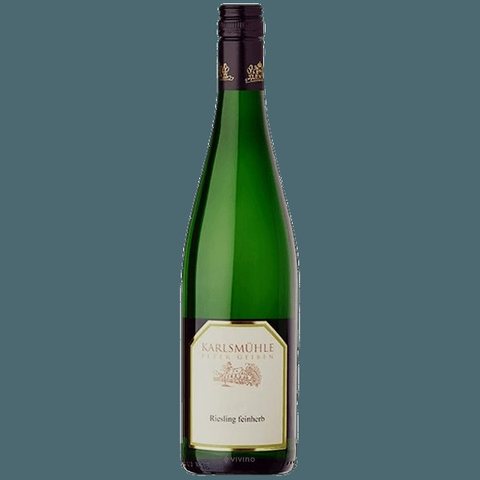
White · Mosel · Germany
Karlsmühle Riesling Feinherb
Scored from 132 calibrated Vivino reviewers. Cohort: White · Germany (1,789 wines).
Find this wine: view on Vivino · compare prices on Wine-Searcher
Is Riesling Feinherb a good wine?
What reviewers say
“4,0 very good, added to my favorites Giallo paglierino brillante con riflessi verdolini. Il bouquet è fine e complesso con le tipiche note fruttate e minerali ben equilibrate. Frutta candita, note erbacee, e una intensa vena minerale sono gli aromi del palato, ben bilanciato dalla struttura rotonda e dall'ottima freschezza. L'elegante acidità, la dolcezza ben integrata, e l'intensa mineralità si combinano per creare un armonico finale.”
From a top-rated Vivino review for this bottle.
Summary
Karlsmühle Riesling Feinherb is a German white from Mosel.
The cohort it is ranked inside holds 1,789 German whites. 132 Vivino reviewers are calibrated for this bottle, and those are the ones the calibrated score reads; a separate, broader pool of 136 reviewers with at least two ratings each feeds the raw-average track.
- Cohort
- White · Germany · 1,789 wines
- Calibrated reviewers
- none yet
Cohort: White · Germany