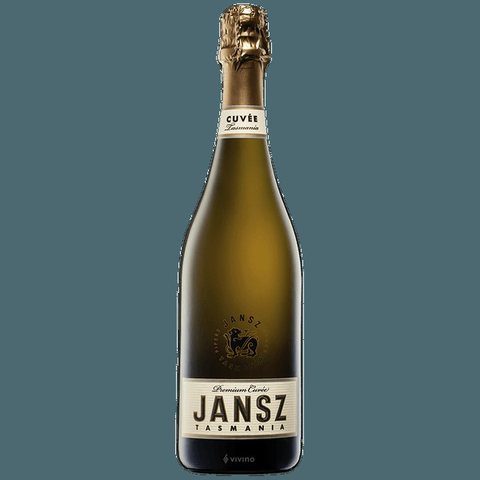
Sparkling · Tasmania · Australia
Jansz Premium Cuvée
Scored from 1,831 calibrated Vivino reviewers. Cohort: Sparkling · Australia (378 wines).
Find this wine: view on Vivino · compare prices on Wine-Searcher
Is Premium Cuvée a good wine?
What reviewers say
“A recommendation from @[1|12697687|Lisa Harlow] from our Zoom catch ups. What a lovely Tasmanian bubbles. Some call it Méthode Tasmanoise. Pale lemon colour.”
From a top-rated Vivino review for this bottle.
Summary
Honeysuckle and citrus scents are immediately apparent with slight aromas of nougat, roasted nuts and a sniff of strawberry from the Pinot Noir. Delicate fruits and creaminess, a lingering finish of citrus and nougat.
Jansz Premium Cuvée is an Australian sparkling wine from Tasmania. The grape is Chardonnay. It sits in the $15–30 band, on a lowest observed 750 ml price of $27.38.
The calibrated figure is built from 1,831 of its Vivino reviewers. A broader pool of 1,848 reviewers with two or more ratings feeds the raw-average track instead. 377 other sparkling wines from Australia form the cohort it is ranked inside.
- Cohort
- Sparkling · Australia · 378 wines
- Calibrated reviewers
- none yet
Cohort: Sparkling · Australia
Closest peers
 Sparkling45.3