Red · Okanagan Valley · Canada
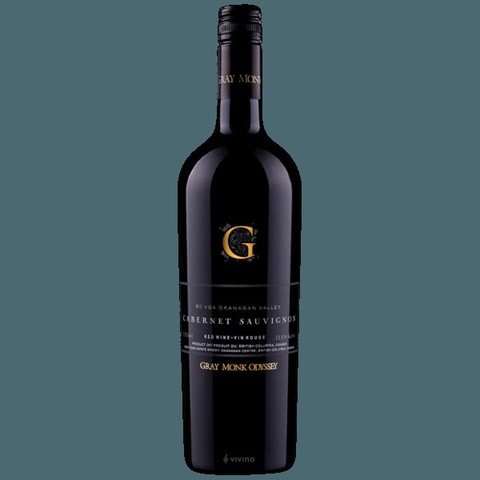
Gray Monk Odyssey Cabernet Sauvignon
Scored from 119 calibrated Vivino reviewers. Cohort: Red · Canada (38 wines).
Find this wine: view on Vivino · compare prices on Wine-Searcher
Is Odyssey Cabernet Sauvignon a good wine?
What reviewers say
“Support Local Sunday. Forgotten I had this just 5 months ago. Its young but drinking well with 1 hr decant. Grapes are sourced from southern Okanagan, fermented, then aged in both new and 1 year French Oak barrels. Garnet colour w purple edge. Nose of red & black fruit, oak and toast. Dry, medium body, med+ acid, moderate tannins. Palate has smooth entry with flavours of ripe blackberry, cassis, soft blueberry, a hint of chocolate and spice on medium finish. A soft wine, once it opens. 3.9🏍😎”
From a top-rated Vivino review for this bottle.
Summary
From Okanagan Valley in Canada, Gray Monk Odyssey Cabernet Sauvignon is a red.
119 Vivino reviewers are calibrated for this bottle, and those are the ones the calibrated score reads; a separate, broader pool of 121 reviewers with at least two ratings each feeds the raw-average track. The cohort it is ranked inside holds 38 Canadian reds.
- Cohort
- Red · Canada · 38 wines
- Calibrated reviewers
- none yet