RankquantRQ
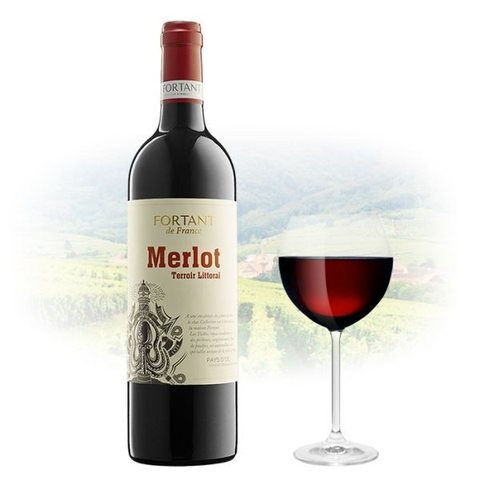
Fortant Terroir d'Altitude Merlot

Red · Languedoc-Roussillon · Frankreich

Fortant Terroir d'Altitude Merlot

Scored from 188 calibrated Vivino reviewers, each re-centered on their own rating baseline before the bottle is ranked. Cohort: Red · Frankreich (147 wines).

47.4%
Global percentile
vs. all 69,234 ranked wines
30.8%
In-cohort percentile
Red · Frankreich · 147 wines
41.5%
AI-adjusted percentile
188 calibrated reviewers, thin samples pulled to the mean

Find this wine: view on Vivino · compare prices on Wine-Searcher

What reviewers say

3,8 - uma grata surpresa com dupla revelação: um francês da wine que agradou e um Merlot que foge do padrão que eu tanto crítico (aveludado, mascarado, chipado, etc...).

From a top-rated Vivino review for this bottle.

Summary

From Languedoc-Roussillon in France, Fortant Terroir d'Altitude Merlot is a red.

188 Vivino reviewers rate with enough spread for a personal baseline to be measured, and those are the ones the calibrated score reads; a separate, broader pool of 193 reviewers with at least two ratings each feeds the raw-average track. Its in-cohort standing is measured against 146 other reds from France, not against the corpus as a whole.

How the score was built

We compare the reviewers of this bottle against every other wine those same people reviewed. Each review is scored relative to the reviewer's own baseline — four stars from someone who hands out fives means something very different from four stars from someone who rarely goes above three. Every reviewer then counts the same, so the result is a calibrated consensus rather than a star average.

Global percentile
Where Fortant Terroir d'Altitude Merlot lands against every wine we rank.
In-cohort percentile
The same comparison narrowed to its cohort — wines of the same type from the same country. A Chilean red is judged against Chilean reds, not against Champagne. Ranked against Red · Frankreich (147 wines).
AI-adjusted percentile
The same reviewer-normalized score, corrected for how much confidence the sample supports: thin samples are pulled toward the corpus average. Each wine keeps the share n / (n + 53) of its measured distance from the average, where n is its calibrated-reviewer count, and the result is ranked on the same scale as the global percentile.53 is the median sample size across everything we rank. Here n is 188.