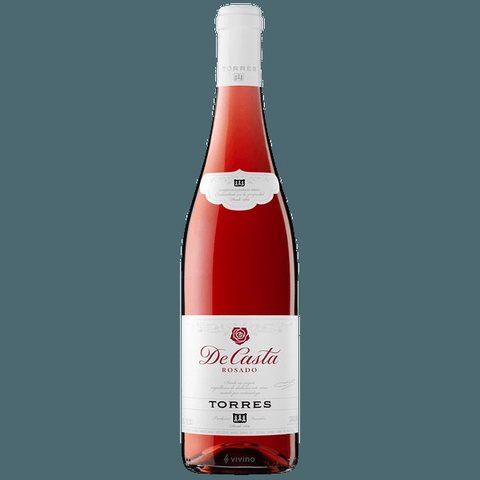
Rosé · Catalunya · Spanien
Familia Torres De Casta Rosado
Scored from 2,093 calibrated Vivino reviewers. Cohort: Rosé · Spanien (119 wines).
Find this wine: view on Vivino · compare prices on Wine-Searcher
Is De Casta Rosado a good wine?
What reviewers say
“Clear red intensity core with watery rim. Mineral nose low intensity strawberry then hint of cherry. The taste is dry and mineral with secondary red fruit, medium acid. Medium minus body, no tannin. This is a simple dry short finish wine.”
From a top-rated Vivino review for this bottle.
Summary
Raspberry color with purple highlights. Delicious floral (confected rose) and fruit (strawberry, blood orange) aromas give way to a full, round palate that is elegant like a rich, ripe fruit framed by fine acidity.
Familia Torres De Casta Rosado is a Spanish rosé from Catalunya. The blend is Blaufrankisch and Grenache Blanc.
The calibrated figure is built from 2,093 of its Vivino reviewers. A broader pool of 2,176 reviewers with two or more ratings feeds the raw-average track instead. 118 other rosés from Spain form the cohort it is ranked inside.
- Cohort
- Rosé · Spanien · 119 wines
- Calibrated reviewers
- none yet
Cohort: Rosé · Spanien