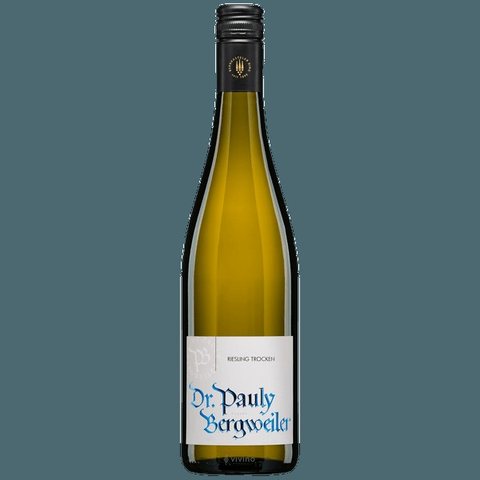
White · Mosel · Germany
Dr. Pauly-Bergweiler Riesling Trocken
Scored from 487 calibrated Vivino reviewers. Cohort: White · Germany (1,789 wines).
Find this wine: view on Vivino · compare prices on Wine-Searcher
Is Riesling Trocken a good wine?
What reviewers say
“88pt. Delicious Riesling 2023 obtained directly from the winery at Bernkastel in Mosel🇩🇪 11%alc. Subtle citrusy scents give way to much more complex fragrances after brief aeration: peach, honeydew, acacia honey, linden, beeswax.”
From a top-rated Vivino review for this bottle.
Summary
The smell is characterized by distinct citrus aromas, Which are also reflected in the taste. A breeze Of green apple underpins the lightness of the wine. Fine grapefruit notes m finish leaving a Fresh taste
Dr. Pauly-Bergweiler Riesling Trocken is a white from Mosel, Germany.
Its in-cohort standing is measured against 1,788 other whites from Germany, not against the corpus as a whole. 487 Vivino reviewers are calibrated for this bottle, and those are the ones the calibrated score reads; a separate, broader pool of 497 reviewers with at least two ratings each feeds the raw-average track.
- Cohort
- White · Germany · 1,789 wines
- Calibrated reviewers
- none yet
Cohort: White · Germany