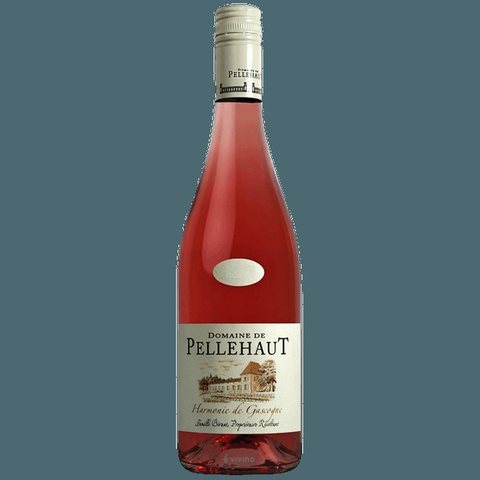
Rosé · Côtes de Gascogne · France
Domaine de Pellehaut Harmonie De Gascogne Rosé
Scored from 842 calibrated Vivino reviewers. Cohort: Rosé · France (2,010 wines).
Find this wine: view on Vivino · compare prices on Wine-Searcher
Is Harmonie De Gascogne Rosé a good wine?
What reviewers say
“In tegenstelling tot de witte wijn die bij het sushi restaurant werd geserveerd was deze rosé alleszins drinkbaar. Een potpourri van maarliefst 6 druivenrassen (CabSauv, Malbec, Merlot, Pinot Noir, Syrah, Tannat) zorgt voor een vrij complexe wijn.”
From a top-rated Vivino review for this bottle.
Summary
Salmon-pink, rather pale colour. Very intense, highly aromatic nose of cherry and strawberry intermingled with floral notes.
Domaine de Pellehaut Harmonie De Gascogne Rosé is a French rosé from Côtes de Gascogne. The grape is Tannat.
The calibrated figure is built from 842 of its Vivino reviewers. A broader pool of 882 reviewers with two or more ratings feeds the raw-average track instead. Its in-cohort standing is measured against 2,009 other rosés from France, not against the corpus as a whole.
- Cohort
- Rosé · France · 2,010 wines
- Calibrated reviewers
- none yet
Cohort: Rosé · France