Red · Constantia · Afrique du Sud
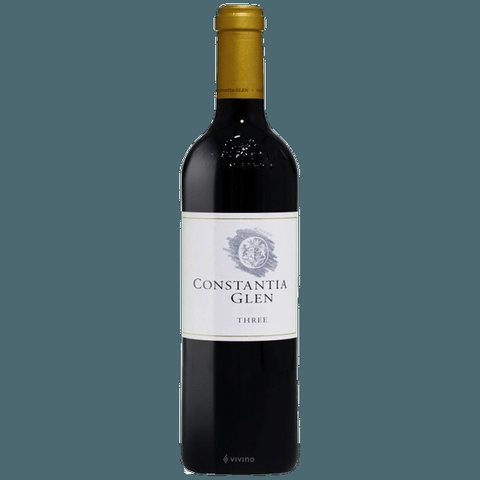
Constantia Glen Three
Scored from 1,394 calibrated Vivino reviewers. Cohort: Red · Afrique du Sud (10 wines).
Find this wine: view on Vivino · compare prices on Wine-Searcher
Is Three a good wine?
What reviewers say
“Dark ruby with some purple hues. Med plus intensity nose of dark and red fruits, dominant plum notes along with oak, vanilla. The unique herbal notes of Constantia transports you to the region.”
From a top-rated Vivino review for this bottle.
Summary
Great depth of colour. It has a bright dark crimson core, graduating only very slightly to a youthful russet rim A complex offering with nuances of blackberries, spice and dark plum fruit. The background is accentuated with an expressive red berry perfume nose promises depth and concentration.
From Constantia in South Africa, Constantia Glen Three is a red. It blends Cabernet Franc, Cabernet Sauvignon and Merlot.
9 other reds from South Africa form the cohort it is ranked inside. 1,394 Vivino reviewers are calibrated for this bottle, and those are the ones the calibrated score reads; a separate, broader pool of 1,426 reviewers with at least two ratings each feeds the raw-average track.
- Cohort
- Red · Afrique du Sud · 10 wines
- Calibrated reviewers
- none yet
Cohort: Red · Afrique du Sud