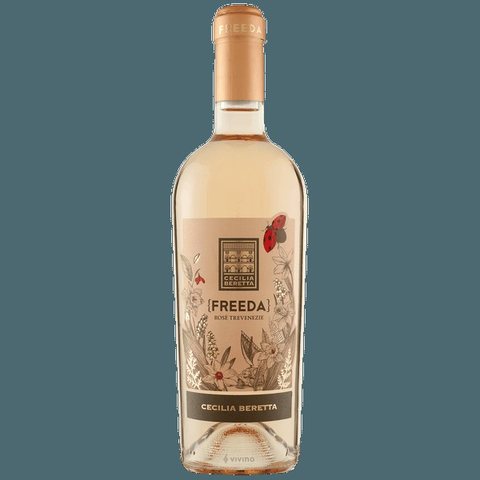
Rosé · delle Venezie · Italien
Cecilia Beretta Freeda Rosé Trevenezie
Scored from 753 calibrated Vivino reviewers. Cohort: Rosé · Italien (223 wines).
47.8%
Global percentile
vs. all 69,234 ranked wines
76.1%
In-cohort percentile
Rosé · Italien · 223 wines
—
AI-adjusted percentile
not enough calibrated reviewers yet
Find this wine: view on Vivino · compare prices on Wine-Searcher
Is Freeda Rosé Trevenezie a good wine?
What reviewers say
“The thing to keep in mind about Roses from the region around Venice is that they are really more like “tinted” Sauvignon Blanc than Roses you might know from the Rhône or California.”
From a top-rated Vivino review for this bottle.
Summary
From delle Venezie in Italy, Cecilia Beretta Freeda Rosé Trevenezie is a rosé.
The cohort it is ranked inside holds 223 Italian rosés. The calibrated figure is built from 753 of its Vivino reviewers. A broader pool of 775 reviewers with two or more ratings feeds the raw-average track instead.
- Cohort
- Rosé · Italien · 223 wines
- Calibrated reviewers
- none yet
Cohort: Rosé · Italien
Closest peers
 Rosé47.9
Paladin · Pinot Grigio Rosé
Trere · Tre-Rosè Sirah
Azienda Agricola Moretti - Podere Casaccia · Sine Felle Rosato
Contrade · Rosato
Mario Costa · Ancant Rosato
Zeni · Vignealte Bardolino Classico Chiaretto
Castiadas · Cannonau Capo Ferrato Rosato