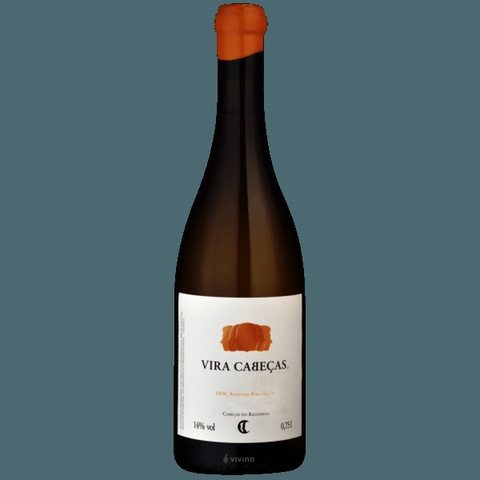
White · Alentejo · Portugal
Cabeças do Reguengo Vira Cabeças Branco
Scored from 172 calibrated Vivino reviewers. Cohort: White · Portugal (1,436 wines).
Find this wine: view on Vivino · compare prices on Wine-Searcher
Is Vira Cabeças Branco a good wine?
Tasting profile
A mature, dry white with an orange-wine impression yet smooth on the palate, showing nutty, honeyed depth alongside smoked butter, apricot, citrus peel and a faintly petroleum edge. Aromatic and balanced with a notable aftertaste, full-bodied enough to pair with roasted fish or white meats.
Synthesized from 172Vivino reviewers' tasting notes for this bottle.
What reviewers say
“Aromático, equilibrado, belo "aftertaste", ótimo para acompanhar assados de peixe ou carnes brancas.”
From a top-rated Vivino review for this bottle.
Summary
Cabeças do Reguengo Vira Cabeças Branco is a Portuguese white from Alentejo.
1,435 other whites from Portugal form the cohort it is ranked inside. The calibrated figure is built from 172 of its Vivino reviewers. A broader pool of 176 reviewers with two or more ratings feeds the raw-average track instead.
- Cohort
- White · Portugal · 1,436 wines
- Calibrated reviewers
- none yet
Cohort: White · Portugal