Sparkling · Champagne · Francia
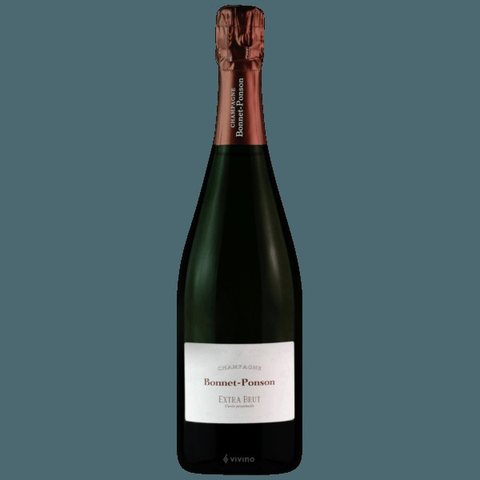
Bonnet-Ponson Cuvée Perpétuelle Extra Brut Champagne
Scored from 534 calibrated Vivino reviewers. Cohort: Sparkling · Francia (363 wines).
Grape · Pinot Noir
83.6%
Global percentile
vs. all 69,234 ranked wines
55.5%
In-cohort percentile
Sparkling · Francia · 363 wines
—
AI-adjusted percentile
not enough calibrated reviewers yet
Find this wine: view on Vivino · compare prices on Wine-Searcher
Is Cuvée Perpétuelle Extra Brut Champagne a good wine?
What reviewers say
“🎯 88/100 pts 3.9 ⭐️ 🕰 9 months aging with sediment contact. 85% in steel and 15% on oak barrels.”
From a top-rated Vivino review for this bottle.
Summary
Bonnet-Ponson Cuvée Perpétuelle Extra Brut Champagne is a sparkling wine from Champagne, France, made from Pinot Noir.
The cohort it is ranked inside holds 363 French sparkling wines. The calibrated figure is built from 534 of its Vivino reviewers. A broader pool of 535 reviewers with two or more ratings feeds the raw-average track instead.
- Cohort
- Sparkling · Francia · 363 wines
- Calibrated reviewers
- none yet
Cohort: Sparkling · Francia
Closest peers
Jacques Robin · Cuvée Kimmeridgienne Brut Champagne
Doyard · Révolution Blanc de Blancs Non Dosé Champagne Grand Cru
Antoine Bouvet · Bisseuil Champagne
J. Charpentier · Millésime Brut Champagne
David Léclapart · l'Artiste Blanc de Blancs Extra Brut Champagne Premier Cru
 Sparkling82.7
Lilbert-Fils · Perle Champagne Blanc de Blancs Grand Cru Brut
Henriet-Bazin · Marie-Amélie Premier Cru Blanc de Blancs Champagne