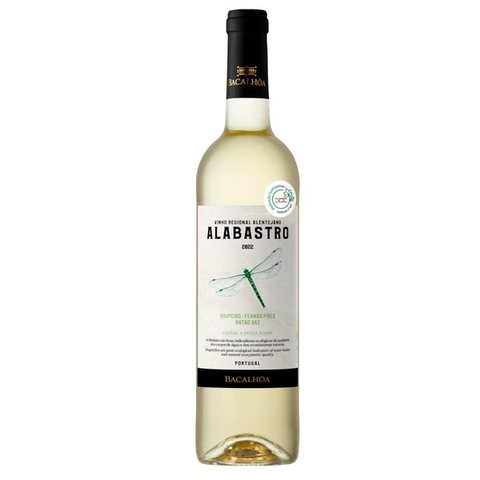
White · Alentejano · Portugal
Bacalhôa Alabastro Branco
Scored from 574 calibrated Vivino reviewers. Cohort: White · Portugal (1,436 wines).
Find this wine: view on Vivino · compare prices on Wine-Searcher
Is Alabastro Branco a good wine?
What reviewers say
“Iniciando os "trabalhos" em Salvador - BA: excelente blend branco refrescante e harmonioso, composto pelas castas Antão Vaz, Roupeiro e Fernão Pires. 3,9 nele fácil!”
From a top-rated Vivino review for this bottle.
Summary
Pale yellow colour. Fruity and intense aroma dominated exotic fruit notes. Taste fruity with tropical fruit nuances. At the end is slightly acidic, which gives it elegance and presence.
Bacalhôa Alabastro Branco is a white from Alentejano, Portugal, blended from Roupeiro, Fernao Pires and Antao Vaz.
The cohort it is ranked inside holds 1,436 Portuguese whites. The calibrated figure is built from 574 of its Vivino reviewers. A broader pool of 590 reviewers with two or more ratings feeds the raw-average track instead.
- Cohort
- White · Portugal · 1,436 wines
- Calibrated reviewers
- none yet
Cohort: White · Portugal
Closest peers
 White8.9