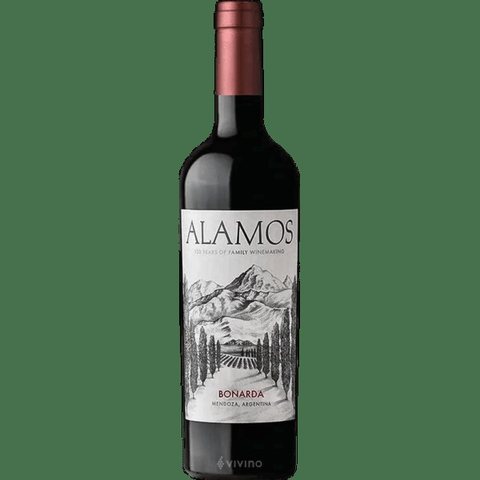
Red · Mendoza · Argentina
Alamos Bonarda
Scored from 2,074 calibrated Vivino reviewers. Cohort: Red · Argentina (482 wines).
Find this wine: view on Vivino · compare prices on Wine-Searcher
Is Bonarda a good wine?
What reviewers say
“Reliable Bonarda of Alamos. A bit young but it seems to be on the way to well rounded up 4⭐. I love this grape so much. Durk ruby colour with garnet hues. Quite abudant fruity bouquet.”
From a top-rated Vivino review for this bottle.
Summary
Alamos Bonarda has a deep blackish, purple color. The nose is full of ripe red fruits with a touch of licorice, spice and violets. The mouthfeel is sweet and juicy with raspberry and strawberry fruit flavors with spicy black pepper notes and a touch of anis. The finish is soft and sweet, with round, velvety tannins.
From Mendoza in Argentina, Alamos Bonarda is a red. At $9.45 for the lowest 750 ml listing, it belongs to the under $15 band.
The calibrated figure is built from 2,074 of its Vivino reviewers. A broader pool of 2,141 reviewers with two or more ratings feeds the raw-average track instead. Its in-cohort standing is measured against 481 other reds from Argentina, not against the corpus as a whole.
- Cohort
- Red · Argentina · 482 wines
- Calibrated reviewers
- none yet